My introduction to Bob Dylan occurred in 8th grade. At the private school, taught in Nepali Medium, our English teacher, Bhojkumar sir, encouraged us to listen to English songs to improve our language skills.
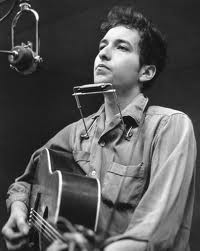
I listened to anything I could find. And one day, I found Dylan. His voice was nothing like the smooth, polished ones I had heard before. It was rough, jagged, and worn like an old road. A voice that sounded like it had carried too many words, too much weight. Accompanied by guitar and harmonica, he sang:
"Come writers and critics who prophesize with your pen and keep your eyes wide the chance won't come again and don't speak too soon for the wheel's still in spin and there's no tellin' who that it's namin' for the loser now till be later to win For the times they are a-Changin"
Initially, I had to listen to the song three or four times to fully grasp the lyrics. But once I did, I was hooked with the words. A few months later, my uncle, noticing my fascination with ‘The Times They Are a-Changin', explained the song's historical significance and how it became an anthem for the hippie movement in the late 1960s. I was astounded to discover that the Woodstock festival in 1969 was organized in New York with the hope that Dylan would perform. Unfortunately, a motorcycle accident prevented him from performing for over two years.
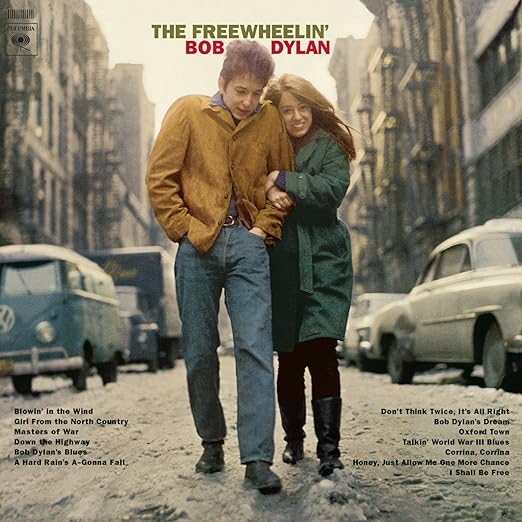
From that initial encounter, Dylan's music profoundly influenced my life. Another song that became a staple in my MP3 player was "Blowin' in the Wind," with its poignant question, "How many roads must a man walk down, before you call him a man?" I pondered about the plight of Black people in America before the civil rights movement of the 1960s and marveled at how a 21-year-old white man could write such a powerful song. A runaway from Minnesota, Dylan drew inspiration from Woody Guthrie, and his association with Joan Baez spurred him to write his own songs. And he sure has written his songs.
Then there was "Like a Rolling Stone," a six-minute lyrical outpouring from Dylan-the poet, his “thought pouring word vomit”. It’s a turbulent journey, and Dylan takes you with him, singing, rolling, and thinking. By the end, you find yourself asking, "How does it feel, to be on your own, with no direction home, like a complete unknown, like a rolling stone?"
This Dylan mania, combined with youthful enthusiasm, resonated even more deeply when I left home for further studies. The life of a perpetual traveler and job-changer has its freedoms and its drawbacks as we are always looking for our roots. I will still argue that "Like a Rolling Stone" is one of the greatest songs ever written. A song? No. A spiral. A collapse. A free fall into nothingness that did not cradle or comfort, but stripped the listener raw, left them standing in the wreckage of their own illusions.
He even critiques authority, suggesting the president sometimes must have to stand naked. He paints vivid, surreal images in "Tombstone Blues" calling the sun is not yellow but it is chicken: a brutal, blistering truth, where he laughs at the absurdity of the world and then dares you to do the same.
“Mama's in the factory She ain't got no shoes Daddy's in the alley lookin' for the fuse I'm in the kitchen with the tombstone blues”
When facing a difficult morning, he sometimes gives up with “It’s alright Ma, I am only saying” saying we have got nothing to lose. He also offers solace, asking the ‘Tambourine Man’ to sing a song where he turns longing into melody, letting it drift into the night like a prayer unanswered. And in "Forever Young," he offers a benediction wishing us:
"May God bless and keep you always, may your wishes all come true, may you always do for others, And let others do it for you."
And, of course, the protest songs. He actively participated in the civil rights movement in his early musical years with songs like "When the Ship Comes In" and "Only a Pawn in Their Game". He stood before Martin Luther King Jr.'s "I Have a Dream" speech, joining Len Chandler for "Hold On" and "We Shall Overcome" while King finalized his speech. His breakup with Joan Baez, and the weight of expectations turned him into a rebel, leading into him going electric in 1966. However, even after he turned electric, he evoked communal dreams in "Bob Dylan's Dream".
"We dreamed a dream, for many years strong, laughing and dreaming till the early morning."
He shared anguish of betrayal in "Seven Curses" and in “Hurricane”. He continued to champion freedom, advocated for social justice and acknowledged the plight of soldiers, recognizing them as "pawns in their game." He critiqued systemic injustices with “Everybody must get stoned” and criticized those who create rules for "old men and fools," expressing his own desire for change.
"Gonna change my way of thinking, make myself a different set of rules. Gonna put my good foot forward, and stop being influenced by fools."
There were love songs, too- if they could be called that. Honest. Love, for Dylan, was not roses and declarations but wreckage, longing, distance. The ghost of something just beyond reach. When I was having my first break up in school, I found solace in his words. He shared my sadness with,
"The friend you used to be, So near and dear to me You slipped so far away, Where did we go astray I passed the old school yard, Admitting life is hard, without you near me."
Until he had to deal with his own, I guess. A breakup where it’s not exactly clear what has gone wrong, but where two people have simply fallen out of love. Over the course of 158 seconds, he articulated the confusion and pain of a relationship fading, as in ‘One Too Many Mornings’, invoking feelings of nostalgia in a post-break-up world of loneliness.
“It's a restless hungry feeling That don't mean no one no good When ev'rything I'm a-sayin' You can say it just as good You're right from your side I'm right from mine We're both just one too many mornings And a thousand miles behind”
His love songs were not soft or sweet. They were jagged, complicated, and unfinished. Love, for Dylan, was unraveling. Brutal. The kind of truth that twists like a knife. It was One Too Many Mornings. It was “It Ain’t Me, Babe”. It was the quiet cruelty of “Don’t Think Twice, It’s All Right”, where he does not so much say goodbye as to burn the bridge entirely.
But before everything came "Visions of Johanna" that stands as an exploration of longing and disillusionment:
“Ain't it just like the night to play tricks When you're tryin' to be so quiet We sit here stranded, though we're all doin' our best to deny it And Louise holds a handful of rain, temptin' you to defy it.”
A sprawling epic navigating the complexities of desire and reality, helplessness and baffled anger.
“He’s sure got a lotta gall to be so useless and all Muttering small talk at the wall while I’m in the hall”
When you were faced with resignation, and when you gave up your fight he joined you with “It Ain’t me Babe”:
“What a highway is for gamblers, better use your sense Take what you have gathered from coincidence The empty-handed painter from your streets Is drawing crazy patterns on your sheets This sky too is folding over you Yes, and it's all over now, baby blue."
In ‘Don’t Think Twice, It’s All Right’, a song about heartbreak, Dylan did not plead. Even to someone whom he says “gave her my heart but she wanted my soul” He did not beg to be understood. He simply said, I’m leaving, saying goodbye in a way, that only he could.
“Goodbye's too good a word, babe So I'll just say, "Fare thee well" I ain't a-saying you treated me unkind You could've done better but I don't mind You just kinda wasted my precious time But don't think twice, it's all right”
Listening to this is pretty much why I am writing this today, “When your rooster crows at the break of dawn, look out your window and I'll be gone, You're the reason I'm a-traveling on, But don't think twice, it's all right”.
Dylan has a song for every mood, every wound, every secret space inside you that you do not know how to name.
"Your voice is like a meadowlark, but your heart is like an ocean, mysterious and dark."
In “Tangled up in Blue” he opens in all sorts of ways and metaphors after his first divorce. A beautiful poem of tragedy, rolling past, present and future together, captured the intricacies of love and separation as:
“I don’t know what they’re doin’ with their lives But me, I’m still on the road Headin’ for another joint We always did feel the same We just saw it from a different point of view Tangled up in blue.”
In 1962, during the Cuban Missile Crisis, he performed "A Hard Rain's A-Gonna Fall" at the ‘Café Wha?’ a stark premonition of the impending crisis. There is something apocalyptic in his words in this. Something that does not comfort, only warns.
“Where the home in the valley meets the damp dirty prison Where the executioner’s face is always well hidden Where hunger is ugly, where souls are forgotten Where black is the color, where none is the number And I’ll tell it and think about it and speak it and breathe it And reflect it from the mountain so all souls can see it”
When history presses itself into the present and if we must face a similar doomsday, I would probably be listening to the same song as well.
While “Johny is in the basement mixing up medicine”, Go and have "one more cup of coffee for the road one more cup of coffee 'fore I go to the valley below."
If you don’t like Bob Dylan, I will just say, "I don’t believe you, you are Liars, and press play.


 kafkaintherun
Leave a comment