


Pietro Della Valle: First encounter with Sumerian ruins.
In the year 1614 CE, an Italian nobleman named Pietro Della Valle left Venice and sailed to Constantinople. Della Valle’s travels took him through Turkey, Egypt and Syria before he reached Iraq in the October of 1616 CE. In Bagdad, he fell in love with Sitti Mani, an Assyrian Christian noble woman, and married her within few months.
In early 1617, while traveling with his new wife and local guides, they noticed local tribesman on the distant horizon. Fearing trouble, their guides decided to search for a place to hide. In the distance, they spotted series of enormous ruins. Their guides tried to negotiate a safe passage with nearby tribal leader, Della Valle and his traveling group remained in the ruins for several days.
During the day, Della Valle passed his time by walking among those monumental ruins. Della Valle would write later:
“Our removal hence being still deferred, I went in the forenoon to take a more diligent view of the ruins of above said ancient building. What it had been, I could not understand. But I have found it have been built with very good bricks, most of which were stamped with certain unknown letters, which appeared very ancient.”
Della Valle was fascinated by the broken fragments of writings that littered the ground that he saw again and again, stamped in stones and clay bricks alike. Della Valle would further write of these symbols:
“Amongst other symbols which I discovered in that short time, two I find in many places, one resembled a pyramid while other had a head with seven stars. It looked like they were some kind of seal.”
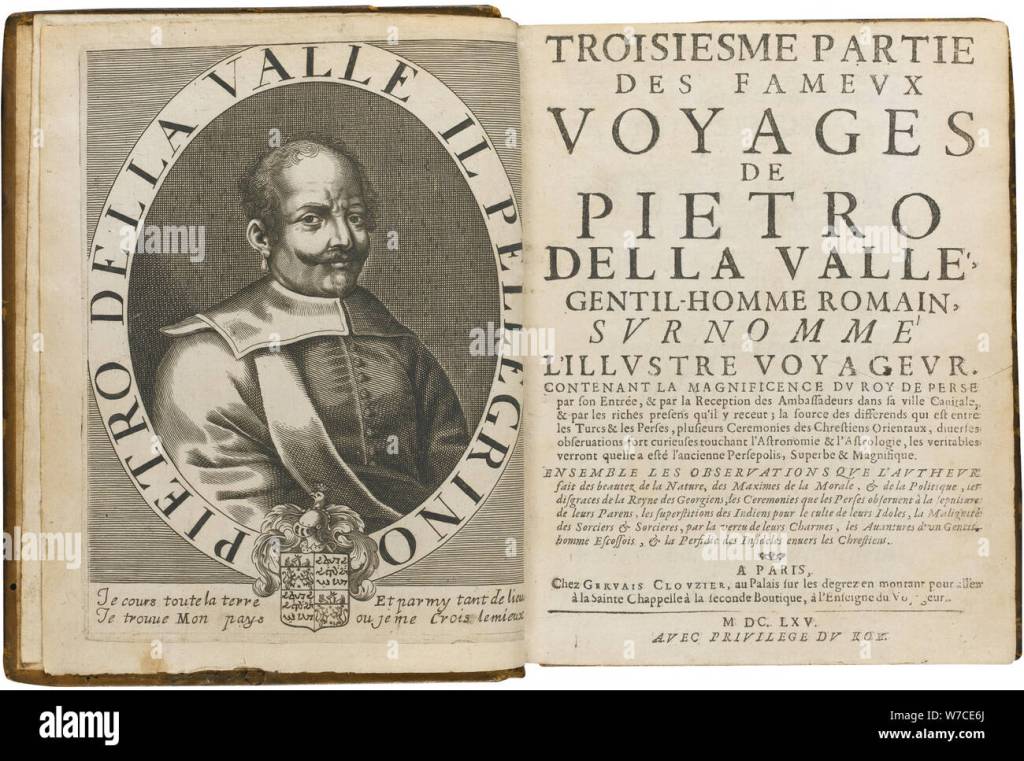
A few days later, after their guides negotiated safe passage Della Valle’s travelling group left these ruins. When they left, Della Valle brought with himself some of these Cuneiform tablets. For the first time, Europeans were being directly introduced to this ancient writing system, developed by the Sumerians in the 4th millennium BCE.
The city of Ur: The port city that gave us bronze and connected ancient world
At the time, Della Valle could not have known that the ruins he explored were those of ancient Sumerian city of Ur- it’s identification would only be made in 1815. By the middle of the 3rd millennium BCE, Ur would have replaced Uruk as the center of Sumerian civilization.
In the fourth millennium BCE, the epicenter of Sumerian civilization was the great walled City of Uruk. Located at the convergence of rivers and canal networks, Uruk was the first true metropolis in the world. The city’s strong wall and growing population made it the de facto leader in the region. The rise of Uruk, sent out ripples across the world. And eventually as the 4th millennium BCE came to close, a number of similarly great cities rose up around it.
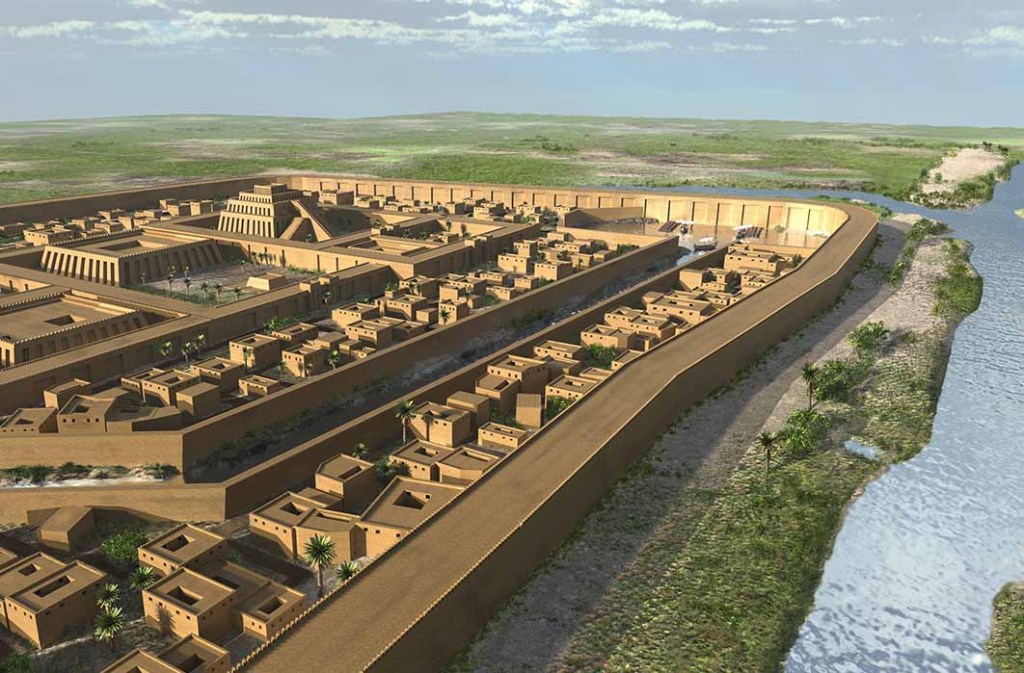
Another Sumerian city, Ur gradually replaced Uruk as the center of Mesopotamia in the first centuries of the next millennium. It would flourish into realms of untold wealth pushing the boundaries of what humanity thought was possible.
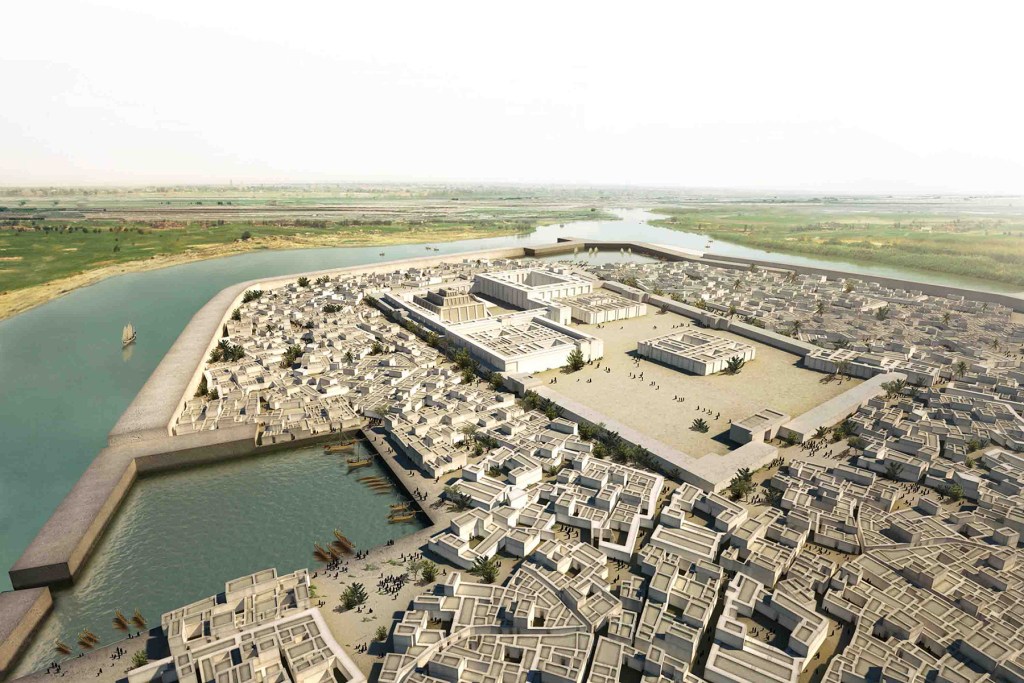
Ur was situated right at the point where Euphrates River met the sea. It was a trading port and fishing town where seagulls circled overhead, and fisherman bartered their catches- Fishes, Oysters and Turtles- on its dock. It’s position, both on the sea and the river would have made it a blooming hub of the region’s trade. As we have already seen, if you need clay or reeds, southern Iraq was the place to be, but for virtually everything else the Sumerians had to trade.
The Sumerians cultivated rich harvests through sophisticated irrigation system. They were alone amongst all the nations of the ancient middle east in that they produced a large surplus and varieties of food. In-fact, archeologists argue that Mesopotamia of antiquity enjoyed far more rich and varied diet, unmatched by not only their neighbors but also by some of the later Bronze age civilization.
The Sumerians, blessed with fertile land and advanced irrigation, produced a surplus and a surprisingly varied diet. Their culinary richness is still preserved in clay tablets. We have even uncovered some ancient Sumerian recipes of the time. The recipe for a dish they called Tuh’u gives sense of the variety they enjoyed:
“Get the water ready, add fat, salt, beer, onion, rocket, coriander, semolina, cumin and beetroot. Add them to the cooking pot, then pound leek and garlic together and add water. Let all blend and reduce to a pulp, then sprinkle with coriander and carrot.”
Boats from Ur: A new age of global trade.
Boats laden with wheat and grain, dried reeds, and figs were now sailed upriver, bringing food to all the neighboring lands. In return, other resources started flowing back.
For ordinary constructions the trees from Zagros mountains could be chopped. But for finer constructions- palaces and ornate city gates- only the prized wood of cedar tree would do. This was brought by ship from Lebanon, where they grew in the high mountain passes. In the Epic of Gilgamesh, one episode even relates the “king’s quest to slay a monster in the mountains of Lebanon and steal the sacred trees it guarded”.
Silver came down the Euphrates on barges from Turkey’s Taurus mountains, while gold came overland from Egypt and by ship from India. Copper came down from the mountains of northwestern Iran and later by ship from island of Cyprus. Tin travelled from long mountain passes of Afghanistan, as it would throughout the later bronze age.
Here in Ur, copper and tin were first combined into bronze- a technology that would define the next age of human history. In the centuries that followed, Ur remained central to the Bronze Age world as the primary port from which Tin flowed.
The Sumerians traded in what we would consider a truly globalized way. From their tiny Coast on Gulf, their ship sailed out to ports in modern Bahrain and Oman. From there, they hugged the shores eastward to trade with another enigmatic civilization – the people of Indus Valley Civilization of Northen India. At the height of Ur’s power, Indus valley civilization was entering its mature Harrapan phase.
From these mysterious people of Indus valley, Sumerians got all kind of spices and gemstones. The brilliant blue, Lapis Lazuli, Sumerians adored was quarried primarily in the cities of Indus Valley. They used this to make jewelry and amulets, inlays in gaming boards, musical instruments and sculptures of astonishing beauty.
All this trade would have passed through Ur and swelled the city to a wealth that likely no other human settlement had ever achieved. Grave goods recovered from tombs of Ur’s Kings and ordinary people alike not only show the unlimited riches of their rulers but also magnificent craftmanship that suggests an advanced community of artists.
One such artifact found in a royal tomb in Ur gives us incredible insight into the lives and manners of ancient Sumerians. It’s an ornate decorative piece of furniture, inlaid with mosaic of shell, red limestone and lapis lazuli.
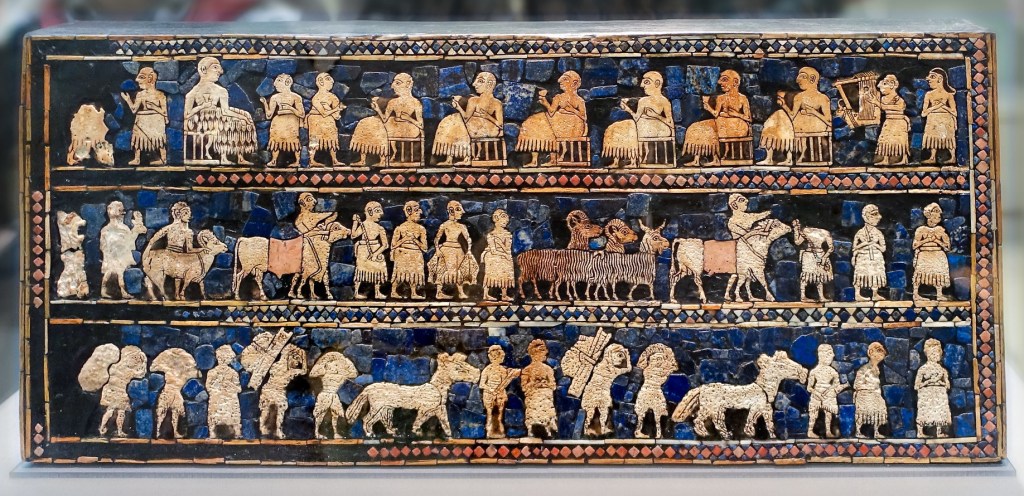
Today the artifact is called “The Standard of Ur”. Its images show detailed scene from everyday life. On one side it shows Sumerians at war: chariots pulled by donkeys, soldiers wearing reed skirts and leather helmets, men carrying long spears, and axes. On the other side, it depicts the Sumerians at piece, farmers and herders working on one level, and above them the scribes with their shaved head sitting at their desk.
At this time, Urbanism in the Sumerian world was reaching its peak. By the late 3rd millennium BCE, most of the Sumer’s population would live in the cities. In this newly urbanized world, the economic power of Ur remained supreme. Over the next centuries, its power expanded and contracted. At one point, some of Ur’s king called themselves “King of Ur and king of Kish”, another city nearby.
Lagash: Rise of Warfare and Terror
Sumer had thrived for more than three thousand years through farming, trade, and shared belief, with little, large-scale warfare. By the mid third millennium the influence of Ur, began to wane. This was a new militarized age when the power of trade and diplomacy was no longer enough. In this new age of violence, one city called Lagash would truly come into its own.
Lagash was a slaving city. It had grown rich by raiding villages in the hills, kidnapping people and selling them across the region. Sometime around 2500 BCE, Lagash fell out with its neighbor- the city of Umma. A dispute about a stretch of farmland along the river that caused the two cities to go to war. One carved stone monument from this time, “Steale of Vultures”, captures the spirit of this time.
In the upper part is normal enough, it shows a king of Lagash, Eannatum in a chariot leading his soldiers in battle. The king is riding ahead of soldiers in a chariot with container of spears and javelin beside him, wearing animal skin across his body. In the lower part, it shows king Eannatum leading phalanx of soldiers with short and long spears, and the scene of the brutal battle.
The fighting was bitter, with inscriptions saying more than 4000 people died in the battle. As the soldiers of Umma tried to flee the battlefield, the stele shows the soldiers of Lagash cutting them down and trampling them beneath their feet. The Stele is unflinching in its depiction of slaughter.
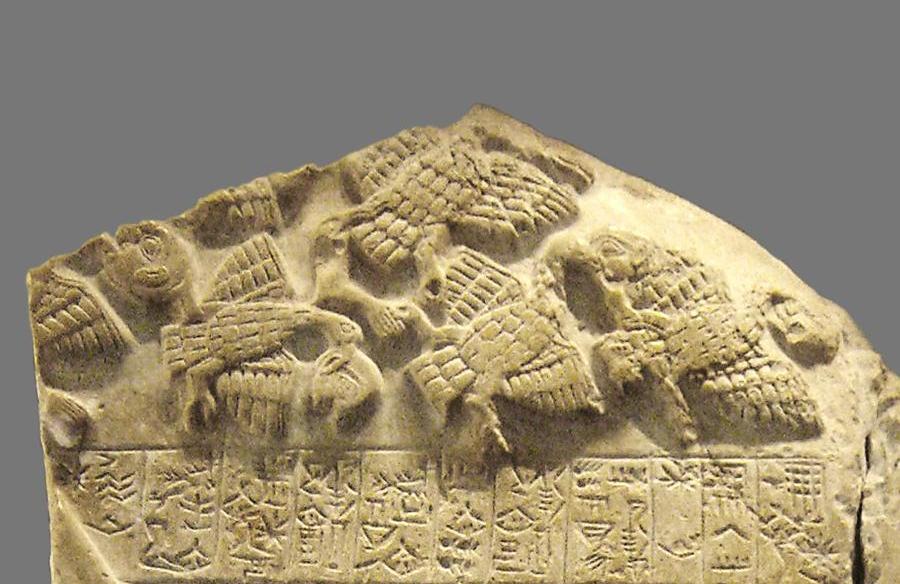
There is something in this carving, that shows the shift in the mindset of people at this time. The nastiness that revels in the suffering of enemies is shown most clearly in the part of the carving that gives its name. These are the vultures flying overhead, carrying the severed head of fallen soldiers of Umma in their beaks, picking at their tongues and eyes. It clearly shows a kind of massacre perpetuated by the city of Lagash, and it does so with relish.
Sumer had been a thriving society for more than three thousand years by the time Lagash came in power. All these years, the society developed because of farming, trade and shared beliefs, and had been a society without major wars so far. But with the rise of Lagash, the world was entering into a new age of warfare. Due to its military might, this slaving city of Lagash went on to conquer much of southern Mesopotamia. Historians argue that this was the first true empire of the ancient world.
Lugal-zage-si- The King of Both Sea: First Empire Built on Revenge and Rebellion.
In this ancient time administrating one city was difficult. The empire of Lagash, despite its military success, was overstretched. In this short-lived empire, King Eannatum ruled through campaigns of terror. Unsurprisingly, revolts rose all around Sumer against him.
As the hated Empire of Lagash fractured and collapsed, a rebel from one of its subjugated cities seized his chance. His name was Lugal-zage-si, and he was the ruler of Umma, the same city whose defeat and humiliation were depicted with such relish in “Stele of the Vultures”. It’s not clear what made Lugal-zage-si so successful, but there is no doubt that he was animated by an ardent desire of revenge against Lagash.
He rose in rebellion against Lagash and quickly toppled kings that were still loyal to the Empire of Lagash: in the city of Kish and Larsa. Then he marched on the great city of Ur, and the mighty walled fortress of Uruk. These both fell and the rebel Lugal-zage-si moved his capital to Uruk. Finally, he marched onto the city of Lagash itself and here we see his fiery vengeance Brust out. The city didn’t hold out for long, Lugal-zage-si burst over his walls, sacked the city and burned it to the ground. Even by the standard of time this was a shocking act, described in horror in several epics.
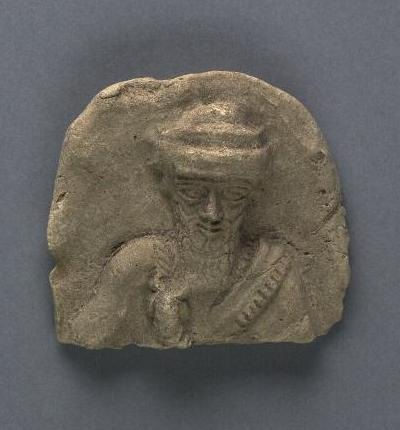
After sacking Lagash, Lugal-zage-si’s momentum was unstoppable. He worked his way north up the course of the two rivers and soon conquered all the regions that Lagash once claimed. At one point, he even claimed to have conquered all the land between the upper and lower sea, meaning the Persian Gulf and the Mediterranean Sea. One inscription reads:
“The great god Enlil gave kingship of the land to him. The region from the lower sea through the Tigris and Euphrates to the upper sea. Thirty-two kings gathered against him, but he defeated them and smote their cities, prostrated their lords, and destroyed the whole countrysides as far as the silver mines.”
This was most certainly an exaggeration. The Sumerians, up until this time, had never been able to maintain distant colonies or occupied far-off land for very long. It is more likely that Lugal-zage-si pulled successful raiding party on the coast perhaps looting some cities and bringing treasure back to Uruk.
This was the first time a Sumerian Prince has ever made this claim- Land between the seas. For the Sumerians, the upper sea was the western edge of their entire world. The idea of a king who might conquer all the land between the seas began to bear fruit in the imagination of all the king that came after him.
Sargon of Akkad: Time for the Other People of Sumer
Like king Eannatum before him, Lugal-zage-si made the critical mistake of overstretching his resources. This empire was simply too big to rule. Before long, civil wars and rebellion broke out in several Sumerian cities.
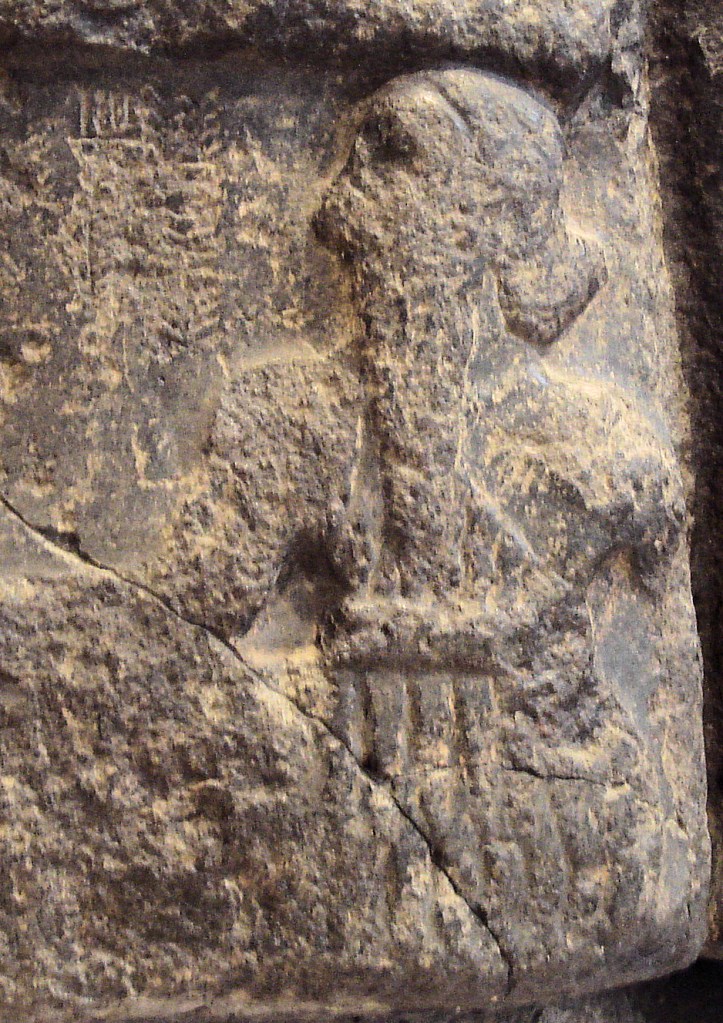
In this time of chaos, the other great people of Mesopotamia began to fancy their chance in ruling. These were the Akkadians, who up until this moment had been junior partner in the civilization of Mesopotamia. These were the people of Akkad, who for the past three thousand years lived under the Sumerian culture and rulers. One man would soon lead them into outright rebellion against Sumerian Empire.
He would go down in history as “Sargon” which in Akkadian means one true king. He would usher in the twilight of Sumerian age. Sargon was also a nationalist, who would only hire Akkadian officers and go on to make Akkadian the official language of his newly formed empire. The Sumerian language and culture will slowly fade gradually replaced by Akkadian alphabets and cultures, as the world become even more connected during the bronze age.
The two people of Mesapotamia had been bilingual since antiquity, but gradually few and few Akkadians would have needed to learn Sumerian, and eventually so for Sumerians.The two people of Sumer, who had lived peacefully since the time of antiquity were beginning to drift apart.
The city of Ur would fall and rise again for countless times in the following centuries. Right at the end of the third millennium BCE, it would rise again to lead a Sumerian renaissance after a Guti dark age. And as for the Sumerian language eventually got lost from practice, it was preserved as a language of gods in temples and ziggurats for another two thousand years- it was treated as the language of gods.
Eventually, it was the nature that once formed this great city, that would lead to its downfall.
The port once it proudly guarded is nowhere to be seen. When it was finally discovered in 1815 CE, The port that once brought it endless wealth is no longer there. In Four thousand years since the height of Ur, the slit and clay deposits from Euphrates and Tigris has moved the sea cost further south by almost hundred and fifty kilometers. When the city was found in 1815, archeologists were astounded to find seashell remains around its wall.
*Tom Cooper’s “Fall of Civilizations” (that formed the basis of this series) date’s Della Valle’s travels to June, 1925.
 kafkaintherun
Leave a comment