

ghosts in the room: five dead writers crowd the room. I underline all.
I sit to write. I kill the light.
the room fills.

Kafka first-
‘the written kiss’,
he says, ‘stays on the road,’-
and Woolf cuts in,
- ‘never reaches the far shore,
you know.’

I'd filled my pockets,
stone by stone -
and somewhere,
Plath is laughing.

I shut my eyes-
Kafka - ‘the ghosts drink it down.’ -
Plath - ‘and all the world drops dead.’
and Anaïs, barefoot,
not waiting her turn:
- ‘you see her as you are. never as she is.’

‘four’ sentences, and hers.
not one of them ends.

tonight,
I sit with this
pen and a notebook,
still too clean for confession,
to write to her.

unfinished, yet,
lost in the battle
searching the couch,
the bed, the table,
for a position from which
the truth might hurt less.

to believe in, even if it hurts
to live in the core of your bones
hanging inside the traffic
of unfinished clauses
hurricanes inside
the unforgiving
hurt that lives
in this beating heart.

the dragons, Rilke begins-
- ‘are princesses’,
Plath needles in
with her red hair and bright wound,
writes in her diaries- ‘I am, I am’,
loud as her tender heart,

‘no’, says Rilke, only waiting-
‘to see us, once, with courage’,
and to me, plainly:
‘you must change your life’.

Woolf, from the window:
- ‘drown or grow the damn gills’.
Kafka, at the pillow:
- ‘or don't send it at all’.
Anaïs, striking the match:
- ‘desire is meant to be indecent.
send it, as you are, or don't send it at all
or stop saying that you love her.’

five ways to go.
I take notes.
that is the whole of my courage:
I underline.
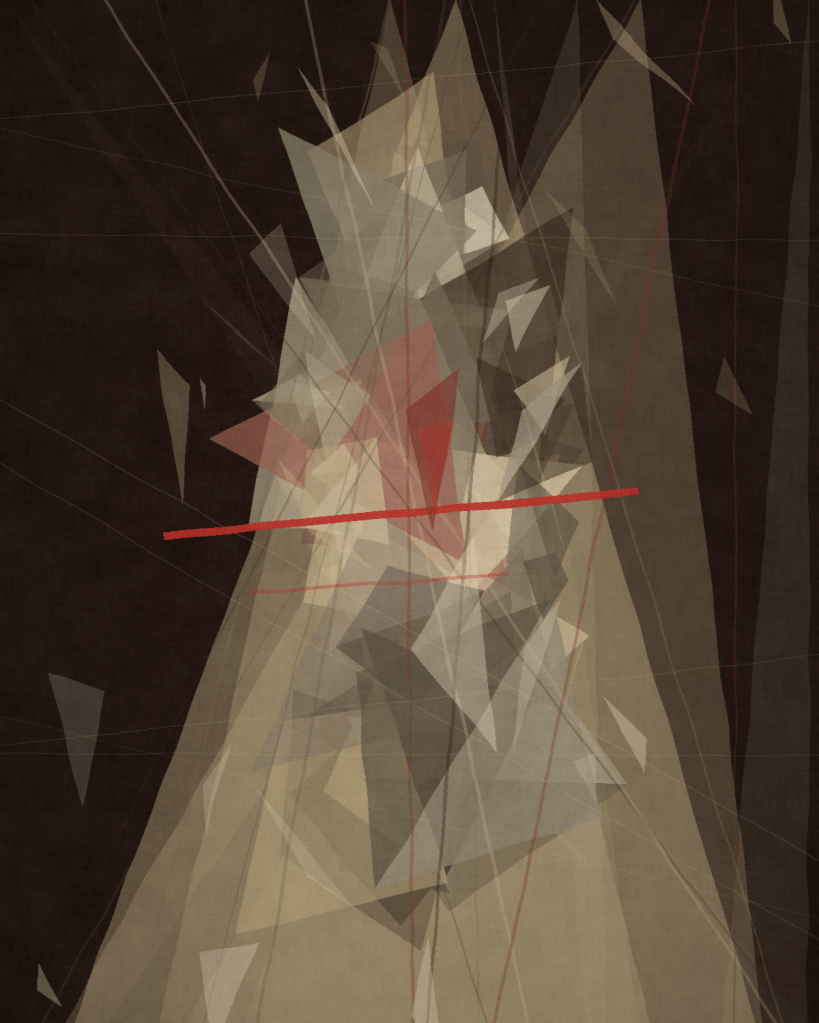
I draw, in red,
a careful line beneath their lives
and feel,
for a moment, close to them-
and- the room turns.

‘close’-, says Anaïs.- ‘he says close.’-
- ‘he read me drowning,’- says Woolf,
- ‘and reached for a pen.’-
- ‘he read me burning,’- says Plath,
- ‘and reached for a pen.’-
- ‘change your life,’ says Rilke,

I told him. he changed only
the margins of his writings.

Kafka says nothing.
Kafka has seen this before -
the man who loves the letter,
not the sending.

say it, Anaïs says.
‘out loud. What you do.’
laughing at the whole scandal.
they wait, all of them,
for once in a single silence,
until I put them down myself,

in my own hand, no quotations,
or finishing one another
no one to hide behind:

I keep the answered as questions.
I underline the brave
and call it love.

and then I do
the one brave thing
I can. watch.

I put the ghosts
out in the hallway-
Kafka to his chair,
Sylvia to her jar.

and I say out loud
the plainest thing I own:
I am glad the world contains you.
I mean it- every word.

and then I give it to the wall.
the light comes up.
the letter is finished.
it is the truest thing I've written
and I have addressed it
to everyone,
which is the surest way I know
I will send it
to no one.

the ghosts
thin to almost nothing,
but the sentences stay,
still open -

Kafka's kiss
on the road,
Woolf's stone
under the water,
Rilke's order
in my ear,
Anaïs's match
burning down
toward her fingers.

I look at the blank page.
I write your name.

I shut my eyes-
the way Sylvia did,
crying, ‘I am’-
and my world
does not drop dead.

it only waits.
a little. longer.

in the letter,
your name nowhere,
the whole thing yours,

goes out
to the wall,
to the readers,
lit and waiting screen -

everywhere
but
to you.


-
the man who loves the letter,
not the sending.

Jamaica, NY,
June 13, 2026


Leave a comment